
The problem is not a lack of games. It is a broken map.
Adult games are gaining acceptance. More of them now appear on Steam, itch.io, and specialist stores, and some reach audiences that would have been difficult to imagine a few years ago. Yet a player can hear about an excellent game and still struggle to answer three basic questions: Where is the official page, which build is current, and how can the developer be supported?
The reason is structural. Many adult games begin as small, serialized projects financed through Patreon, SubscribeStar Adult, or another membership platform. A public build may live on itch.io, a later commercial edition may arrive on Steam, development notes may be posted to a creator page, and years of troubleshooting may be buried in a forum thread. No single service has the complete record.
That fragmentation is the problem Redlight Codex is built to solve. We treat discovery and acquisition as separate jobs. A forum post can help us discover a title, but the creator or authorized storefront should tell us where to obtain it.
Begin with an identity anchor

When a recommendation catches our attention, we first look for a page the developer controls: an official website, itch.io profile, Steam developer page, Patreon, SubscribeStar, or a social account linked from one of those places. That page becomes the identity anchor for the rest of the search.
We then follow the links outward instead of trusting the first search result. The creator may offer a free public build on itch.io, a newer supporter build through a membership, and a finished or edited edition on Steam. Those are not necessarily duplicates. They can differ in content, censorship, platform support, patches, and release timing.
A good catalog entry should preserve that relationship. It should name the developer, official stores, supporter pages, current status, censorship notes, and any community thread separately so a player knows what each link represents.
Steam is the familiar storefront, not the whole industry
Steam gives adult games conventional store pages, wishlists, automatic updates, user reviews, and a familiar checkout. It is often the easiest place to buy a completed game or a project that has matured into Early Access. Valve also requires developers to disclose mature content, and those disclosures affect what a customer can see under their store preferences.
That convenience comes with blind spots. Regional availability varies, store visibility depends on account settings, and the Steam build may be censored or separated from an external adult patch. Some long-running projects do not reach Steam until years after their first public release. We use Steam reviews as one source of player experience, but not as proof that Steam has the newest or only legitimate version.
itch.io is where many projects become visible first
itch.io is unusually useful for adult indie games because a creator can publish a demo, a pay-what-you-want public build, a commercial download, devlogs, and platform-specific files on one customizable page. It is often the shortest route from a creator profile to something playable.
Discovery still requires deliberate settings. itch.io says NSFW projects only appear in search and browse for signed-in users who have enabled adult content. Direct links can therefore work even when a title seems absent from search. The store also requires adult content to be labeled, and its payment rules can limit which material can be sold even when a page may remain available for free distribution.
We check the creator profile as well as the individual game page. A profile often exposes related projects, current devlogs, supporter links, and whether the page is maintained by the same account that publishes the game.
Patreon and SubscribeStar are often the production line
Membership pages are not merely tip jars. For many teams they are the release calendar, development diary, testing group, and operating budget. Supporters may receive a build first, lower tiers may receive it later, and a public version may follow after a set delay. Polls, previews, Discord access, credits, and higher-resolution art can sit beside the game itself.
This explains why searching only storefronts misses so much. A creator may spend years shipping playable chapters before the project is ready for a conventional launch. Patreon now lets eligible adults discover Adult/18+ creators, while SubscribeStar Adult describes itself specifically as a membership platform for adult game developers and other adult-media artists. Even so, membership pages can change, payment policies can change, and old posts are poor substitutes for a durable game archive.
Our rule is simple: use the membership page to understand and support ongoing work, then record where each downloadable build is actually delivered. We also note whether a public build exists so readers can try a project before joining a monthly tier.
Specialist stores and launchers are rebuilding the missing shelf
Specialist publishers and stores can do something general marketplaces struggle with: present adult games as a category instead of material that must be hidden behind several preference screens. OppaiMan has expanded from game development into a platform for adult players and developers. JAST USA, MangaGamer, and DLsite also maintain established catalogs, although their focus, localization, regional access, and content rules differ.
Lewd Launcher is a newer project described by participating developers as an adult-game launcher for downloading and maintaining games. That is promising, but emerging services deserve the same checks as any other source. We verify the developer relationship, delivery method, version history, and payment terms before treating a listing as authoritative.
These services are additions to the map, not automatic replacements for creator pages. A specialist listing is most useful when it points clearly to the developer, names the build, and makes ownership and updates understandable.
F95zone is useful for discovery, history, and troubleshooting
F95zone is one of the largest community indexes around adult games. A thread can reveal aliases, abandoned versions, walkthroughs, bug reports, device-integration claims, and years of player discussion that would otherwise disappear. It is often how we learn that a project exists.
It is not automatically the official distributor. Forum downloads can be posted without the creator's authorization, thread metadata can lag behind a release, and community claims can repeat without anyone testing them. We label an F95 thread as a community reference, never as proof of an official release or confirmed compatibility.
The safest use is investigative: take the title, developer name, version, and clues from the thread, then trace them back to a creator-controlled page. If the developer links to or actively maintains the thread, we record that relationship. If not, the link remains a clearly labeled community source.
How we decide that a release is legitimate
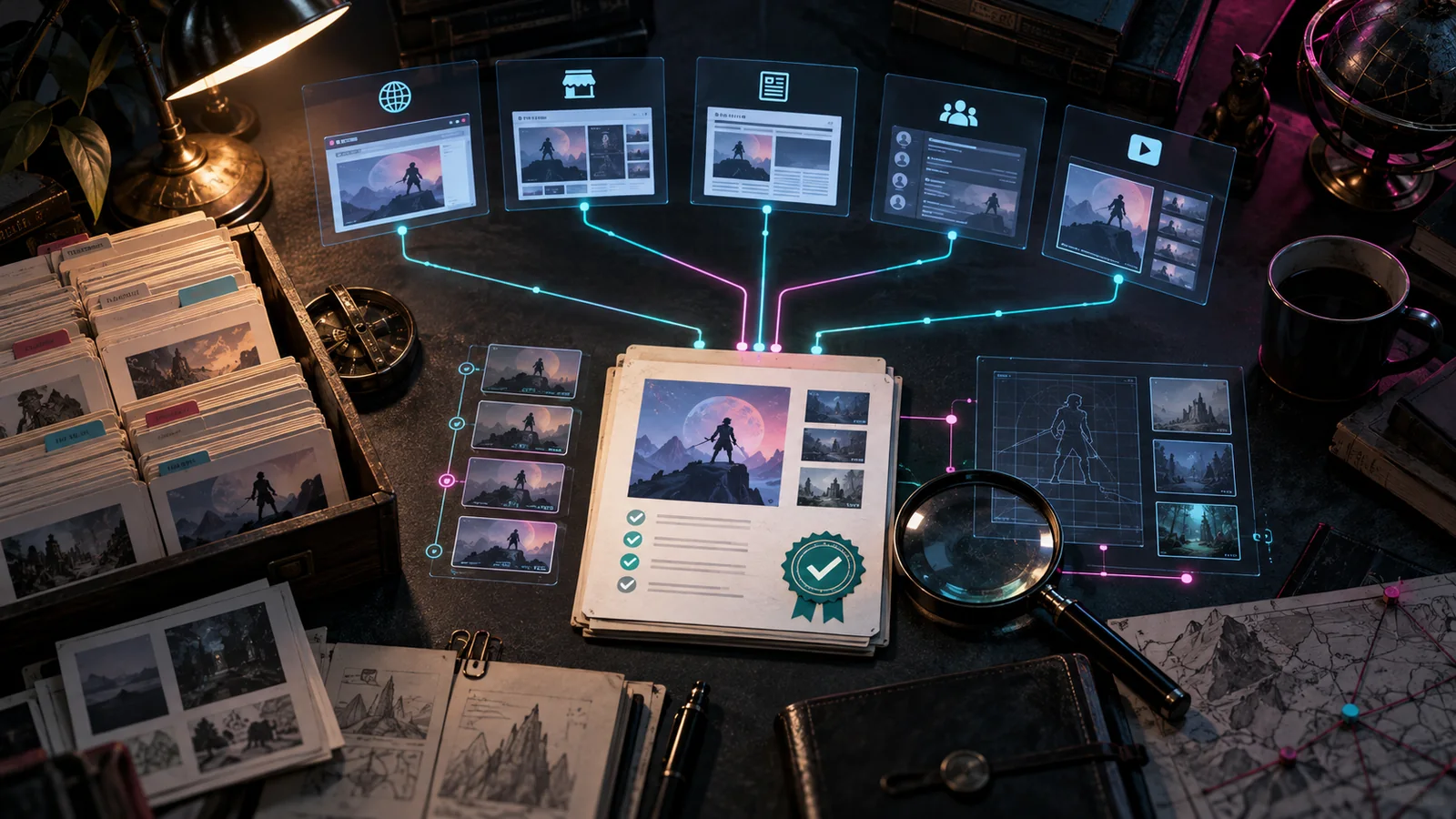
We look for a chain of corroboration. Does the developer's site link to the store? Does the store name the same developer and publisher? Do version notes line up across the official pages? Does a social or membership account point back to the same domain? One strong creator-controlled link is worth more than a dozen copied download pages.
We also compare the build itself: version number, platform, censorship status, included chapters, patch requirements, and update date. A legitimate older public build is still legitimate, but it should not be mistaken for the current supporter build or final store edition.
When we cannot establish the chain, we say so. Unknown is a useful catalog status. It is better than sending a reader toward an unverified executable or implying that a community mirror supports the developer.
Our practical search route
Start with the game's title and creator name. Find a creator-controlled page. Open every official store and membership link from that anchor. Record the newest version, release status, platforms, censorship notes, and whether a free public build exists. Only then use community forums to fill in history, troubleshooting, tags, and leads that still need testing.
That process sounds slower than clicking the first download button. In practice, it saves time. It reduces dead links, mislabeled builds, malware risk, false compatibility claims, and the common frustration of discovering that the version we downloaded is years behind the creator's current work.
Redlight Codex will turn that work into a searchable catalog. Each game can have official store links, supporter pages, community references, status, engine, visual style, censorship notes, content tags, and device compatibility results. The goal is not to decide what everyone should play. It is to make the real choices visible.